
Curved Magnum vs. Straight Magnum: Which Should You Choose?
Start with a curved magnum when you’re choosing for soft transitions; compare a straight magnum when solid fills are your main task. Both can shade and fill. The clearest difference is the needle-tip profile: curved magnums have a rounded front, while straight magnums have a straight front.
For a useful comparison, keep the diameter and needle count the same first. A 7CM and an 11M1 change more than the front shape, so they won’t tell you much about that difference alone.
What changes between curved and straight magnums?
On a curved magnum, the center needles extend slightly farther than the outer needles, forming a rounded working edge. That’s the structure described in the FK Irons needle glossary.
A straight magnum has a straight working edge. “Straight” describes that front profile; it doesn’t mean you’re buying a single-row flat needle.

Here’s a practical way to shortlist the two:
| What you’re comparing | Curved Magnum (CM) | Straight Magnum (M1) |
|---|---|---|
| Front profile | Rounded; center tips extend farther | Straight across the working edge |
| A task to start with | Soft shading and gradual transitions | Solid fills and coverage |
| What else to check | Diameter, count, taper and grouping width | The same details—not just the M1 label |
The task column is a starting point, not a limit. For example, Cheyenne lists its soft-edge magnums for both filling and shading. A curved front doesn’t rule out color packing.
Choosing for shading and gradients
If the area needs to fade from dark to light, put CM on your shortlist. YES Needle positions its curved magnums for soft shading and gradients, so that’s a sensible place to begin comparing options.
Then look at the space you’re working in. A broad shadow and a small tonal area don’t give you the same room to work. Choose a grouping that fits the area rather than buying a larger count just because it’s a shading needle.
If you already get the transition you want with M1, there’s no need to replace it purely because another cartridge says “soft edge.” Compare what you need to change: the edge, the size of the grouping, or the way your current setup responds.
Choosing for solid fills
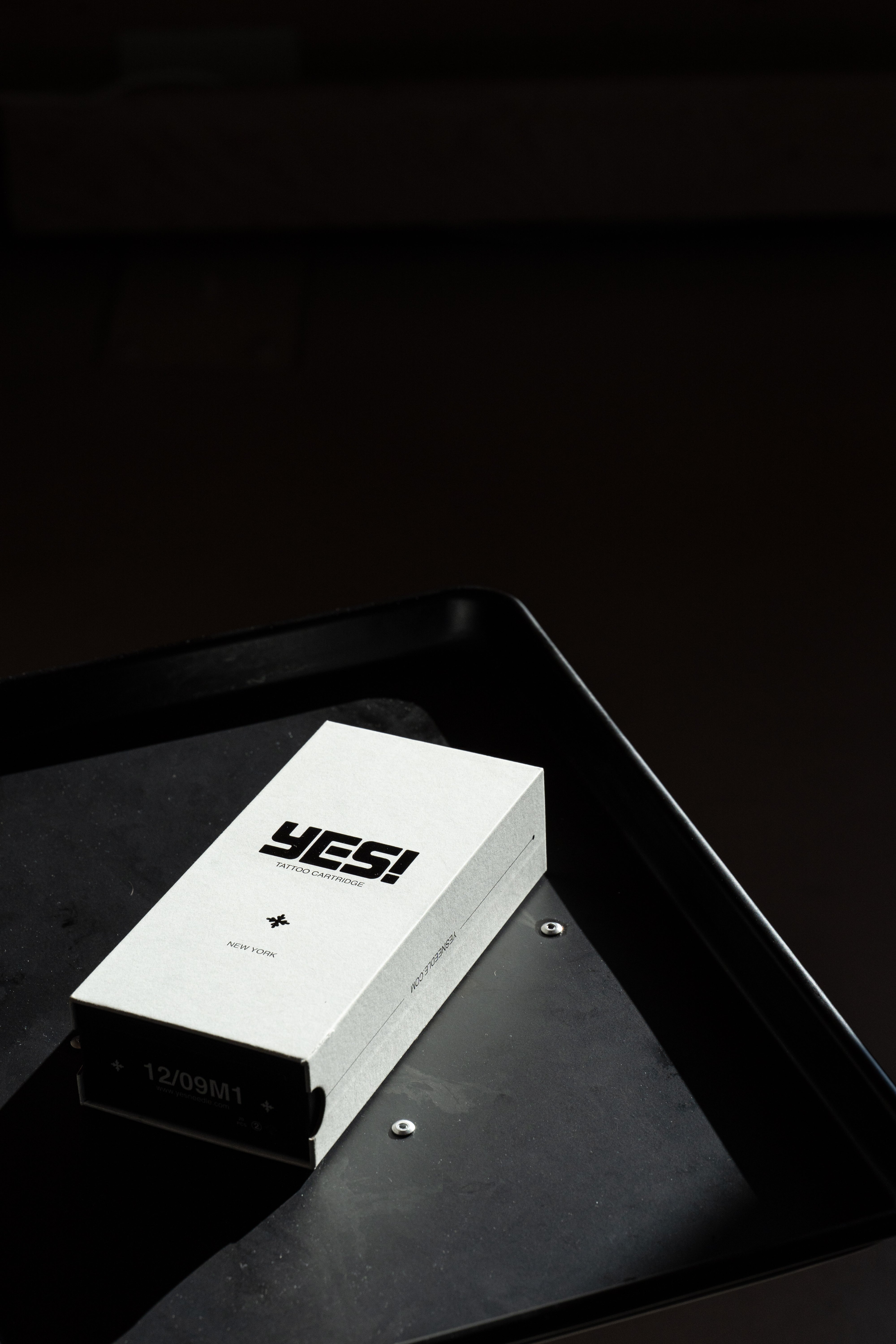
When an area needs an even, solid fill, include M1 in your comparison. The YES Needle M1 range is aimed at filling and shading work.
CM can still belong in that setup. If you already use a curved magnum for both tone and fill, the useful question is whether a matching M1 gives you something you’re missing. The name alone doesn’t tell you how many passes you’ll need.
A piece can also need both tasks: a solid dark area beside a soft fade. Choose for each area instead of expecting one needle label to make every decision for the whole tattoo.
Compare 12/07CM with 12/07M1 first
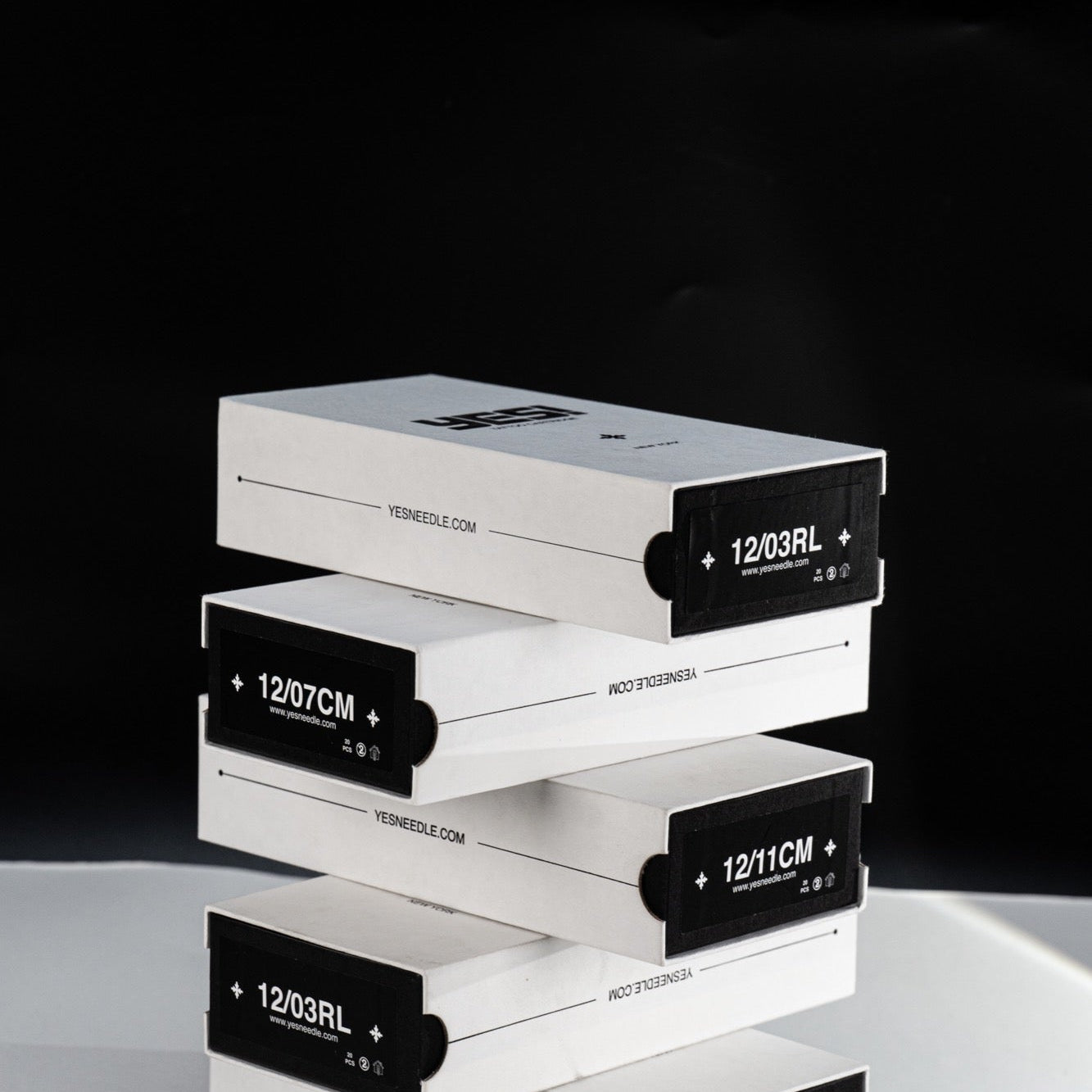
The YES Needle CM range and M1 range both list 5-, 7-, 9- and 11-needle options with the 12 diameter code.
That gives you matching counts to compare. 12/07CM and 12/07M1 share the listed diameter code and seven-needle count; CM and M1 identify the different configurations. They’re a clearer starting pair than 12/05CM and 12/11M1.
You still need to check taper and grouping width. Matching diameter and count don’t prove that every other part of the cartridge is identical. If those details aren’t listed, ask before treating the two as interchangeable.
For help separating the numbers from the configuration letters, see the tattoo needle size guide.
Before you add another box to your kit
Write down the job you want the new cartridge to do: a softer transition, a different-sized grouping, or a solid fill. Then compare one matching-count option with the cartridge you already know.
Keep the full code with any practice samples so you can tell what changed later. If you change the brand, diameter and count together, record that too—you’re comparing complete setups, not isolating the front profile.
Buy the configuration that fits a job in your work. You don’t need both types in every size to make a useful comparison.
People Also Read
How Many Tattoo Cartridges Should You Stock? A Studio Reorder Worksheet
Work out what to reorder from your actual cartridge usage, usable stock and delivery window. Includes a simple worksheet for working studios.
Tattoo Needles for Color Packing: Choosing for the Space You Need to Fill
Choose color-packing cartridges around open fills, narrow corners and gradients. Compare YESNeedle M1 and CM options before ordering.
Tattoo Needles for Shading: How to Choose for Your Design
Start with the shadow in your design, then compare the grouping and count. A practical guide to narrowing down shading cartridges.
Long Taper vs. Short Taper Tattoo Needles: What Changes?
Taper describes the narrowing section of a needle. Here’s what changes—and what to check before choosing your next cartridge.